The Broke Author's Guide to Running the Business: Part 2
Non-negotiable expenses, negotiable-but-worth-it investments, and ways to SAFELY shave costs

If you haven’t read Part 1, click this link to catch up. That’s where all the freebies I’ve loved and used are listed, plus the lifetime licenses worth investing in!

A Quick Update From Part 1:
Bless each and every one of you who recommended Affinity, the 100% FREE alternative to Photoshop.
Holy.
Cow.
How have I lived this long without it???
I’m still needing to carve out some solid time to deep-dive into the tutorials so I can learn it, and then use it at the levels I’ve always dreamed of being able to do with virtually everything. But it looks so pretty—and so reassuring—sitting there in my MacBook Air applications folder like a reminder that yes, I can do this. I can have pretty pictures I made myself even when I was poor 🥹
Some of you recommended Ulysses, and I did look into that. Promise. I was just really turned off by the monthly/annual fee when Scrivener is a one-and-done investment of only $50. I might give Ulysses a solid go for one year when I have the $40 to spare for experiments, as I’m wondering if separating platforms for series might make my brain relax a little more (The White City is a bit different in construct from Song of the Sidhe). The iPad-to-Macbook seamless syncing is a HUGE appeal and where it does currently override Scrivener, but I’m not an iPad-keyboard-user at all so I’m not sure if this will actually benefit me. TBD!
“How long will you hide
oh queen of the night?
How long will you shudder
when you should fight?”
The third book in the award-winning modern epic romantasy series is around the corner—and right now is the perfect time to join the official Advance Reader Copy (ARC) team!
Members of 🍄The ARC Circle🍄 enjoy:
FREE admission
FREE digital copies of Ithandryll (Book 1) and Heir of Oberon (Book 2)
ARCs for each upcoming book in the Song of the Sidhe series
First Access to promotions on paperbacks and special editions
Exclusive Access to the private Discord server
Gifts & Goodies from the author (me!) like digital stickers, letters from the Otherworld, and more!
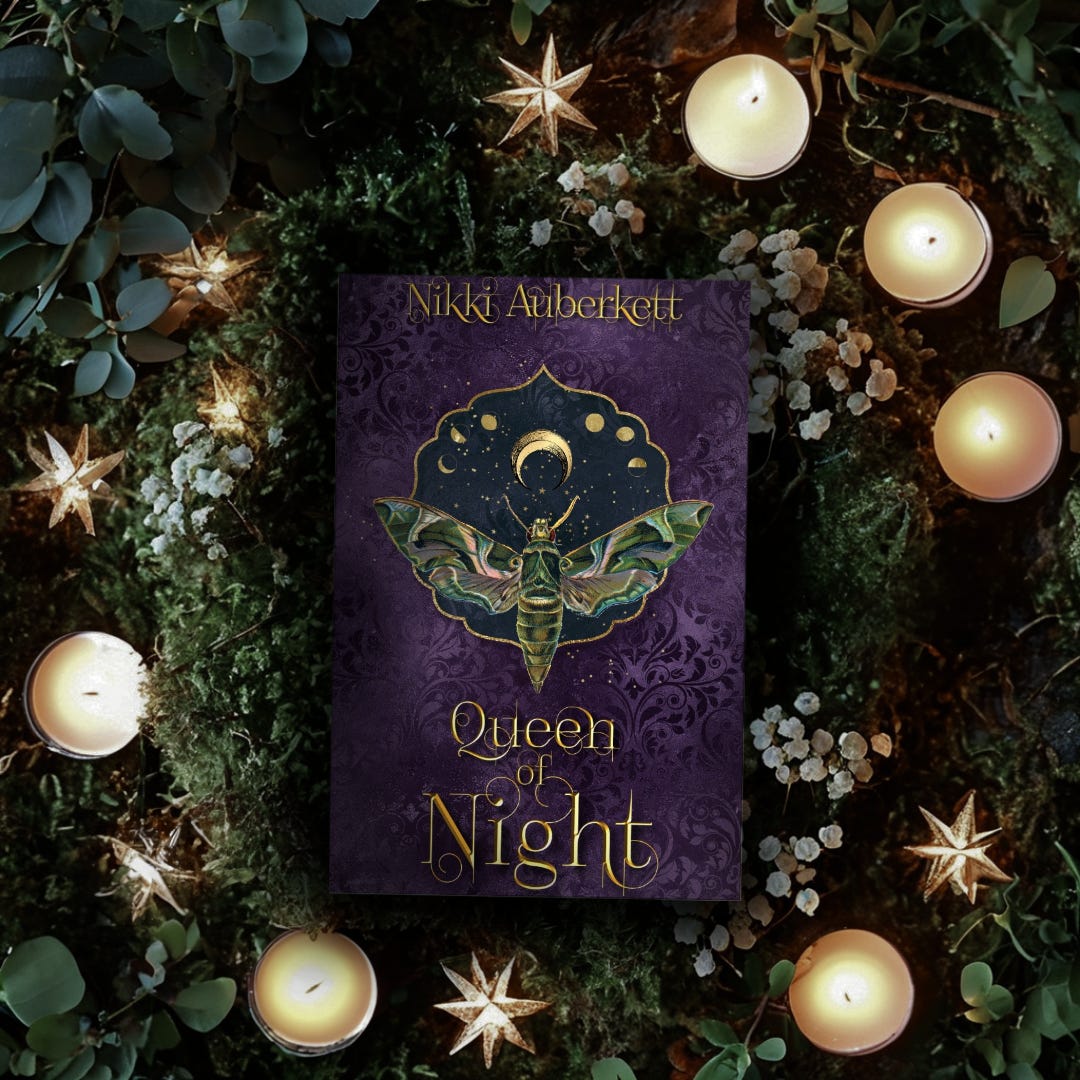
✨🌙ARCs for Queen of Night will be distributed mid-August✨🌙
What’s A Non-Negotiable Expense
I couldn’t think of a “Wow, Nikki is so wise and articulate!” intro, so I’m just gonna dive right in and get real with ya’ll in this article, the “Part 2” of my (Quick Reference) Broke Author’s Guide to Running the Business:
There are a few things that do cost money—not much, thank goodness—that you must have as a professional independent author if you’re serious about your career and want to position yourself for success within the industry.
Non-negotiable. No arguments. No excuses. None of this “if I have to choose between feeding myself or having that” nonsense people have given me in the recent past because all of these exist to help you make that money for your food.
Think of it this way: even with brick-and-mortar 9 to 5 jobs, you still incur non-negotiable expenses. Fuel for your vehicle, public transport passes if you don’t drive, the food and drinks you consume along the way (whether you prepared them ahead of time or bought on the go), the clothes you wear so you don’t arrive in pajamas…all of those are required expenses we don’t bat an eye at because they make sense.
So why is it such a battle when I bring up the things authors need that also make sense—and that cost way less than anything I just listed?
Remember, I’m coming from a very real place of having to decided between eating a meal now or building a foundation that will feed me for years to come. I’m also someone who thrifted clothing and scraped together food app coupons to make the commute from Gary, Indiana to my administration job in Old Town, Chicago as feasible as possible.
I know how much “reality” costs.
I also know which option is cheaper while yielding more results.
Without these small investments, it’s a coin toss on whether people and companies (like publishers, sub-rights reps, etc.) will invest in you. They might, they could, but not as consistently or assuredly as with those who do incorporate these Non-Negotiable Business Expenses—and a huge reason why is because of how easy it is for scammers to imitate you.
Custom Web Domain
I highly recommend going through Squarespace for this, as it’s the least expensive of all the options I’ve looked into and the easiest interface for working with DNS records should the need arise. It used to be Google Domains, but Squarespace bought it out—which means you don’t have to pay the website developer for access to your domain dashboard. You also don’t need to have a website with them, either.
The average cost of a custom domain runs anywhere between $12-$14/year. If the domain name you plug in costs more than that, change the name until you find one you like that also stays within that price range.
It’s genuinely that simple. And that affordable.
What’s not simple is the ability to use a custom domain you don’t own and don’t have access to the DNS records for—which is why scam emails will more often come from nikkiauberkettpublishing@gmail.com instead of nikki@nikkiauberkett.com (and that’s my real email address; you can click on it and send me a note!). I own the domain, I own the access to the DNS and MS records, and I have my business email programmed specifically to that.
Once you have the custom domain, you can use it everywhere: your website, your email inbox, and if you’re extra tech savvy or willing to read through a quick tutorial, you can even set up subdomains to redirect other things under the same branded URL.
For example: biolink.nikkiauberkett.com is a subdomain redirecting to my Beacons link-in-bio so it looks clean and gets rid of that super misleading “.ai” tag that makes my eye twitch every time I see it.
Here’s another thing to consider: most people in the publishing industry (and other industries) know how much a custom domain costs. So when a jumbled URL appears in the contact information for an author’s website, one of the first questions that comes to mind is, for better or for worse, “They want me to invest in their books, but they couldn’t swing $14 for their website? What other corners are they cutting?”
A Quick Note: perception shifts in your favor between Author Website and Author Store Site. Shopping URLs are notoriously messy no matter how much customization is done, so honestly, I think you’re fine if your only website right now is literally just a grid page showcasing your books and merch. Or if you’re like me and using Substack for your main website but linking in Square for the e-commerce (Coming Soon, btw!), a lot of people have confirmed that it’s almost expected for the main site to be clean in the URL but the shop site to be something like square.shop.books.123456.com/234542!@#$
Business Email
This is the one that people love yelling at me for and hate hearing me say it:
Get. A. Business. Email.
Google is only $7.50/month and includes even more programs in Google Workspace, like Meet (buh-bye, Zoom) and larger storage capabilities in Drive. That’s the price of one Frappuccino at Starbucks, or actually less than if rumors of recent price hikes in the coffee world are true.
Why do I go so hard on this despite having my rear end kicked repeatedly by dissenters?
The Scene: I wake up, get dressed, have breakfast. Check my email. There’s an awesome pitch email from a fellow indie author who runs a book club and truly loved my contemporary take on romantasy, and they want to interview me for their next club newsletter. Would I be interested?
Definitely!
If only that email address wasn’t MarkTwain67@gmail.com
Scammers are getting good. I almost bought into one from the name and position of someone who genuinely exists in the publishing world by that name, in that position, and the company they work for is the company web address the email linked to.
But I checked the email domain. Then I checked the real company website and the domain their business emails send from (usually listed in Team Bios). Confirmed it was not, in fact, the actual person or company.
I’m also a bookstore retailer, so I have to double-down on this when receiving pitches for books from authors who want me to invest in their work. Even though I’m currently consignment-only, I’m working on a buyout stage to shift into direct wholesale purchasing and yes of course I want authors to contact me with pitches for their books!
But I can’t trust MargaretAtwood@gmail.com
I can trust hello@margaretatwoodisawesome.com especially when I’m able to go to her Author Website and confirm it either directly with her agent, her, or the contact information published on the site. (Please Note: I don’t actually know what her email is. I made that up as an example.)
Editing
Editing is expensive as hell. I get that. Zero argument from me.
But you’re paying a professionally trained, highly educated human being to dedicate precious hours of their life to your work and only your work. That high price tag does often come with exclusivity to your project when it’s with a well-credentialed, well-respected freelance editor—meaning they might be fully booked, but they’re tackling one project at a time instead of split-screening copy edits between 4 projects to meet quotas.
There are three rules to this investment::
Never, ever, ever rely on self-editing, beta readers, or some guy you know from that one college class three years ago to “replace” professional editing if your goal is to publish the manuscript and sell the book beyond friends and family. Supplement the editing? Sure! But none of that replaces the trained eye of a professional editor. Ever.
To Everyone Who Can Actually Self-Edit & Do A Genuinely Good Job (coughmecough): Don’t be going around telling people this is a viable option. It’s like being a structural engineer and proclaiming to the masses that it’s totally possible to design and build your own house without investing in contractors. Possible for you? Sure! But is it a good idea to encourage this to everyone who’s never taken a single course on the topic? Hell no.
Never “go cheap” with an editor unless they have the portfolio and testimonies—and maybe a plausible situation, like me bartering editing for Vellum or copies of your book for my bookstore—to guarantee you’re going to get quality work. Show me an “affordable editor” and I’ll show you someone who probably doesn’t know how to operate their business in a sustainable way, and/or they’re not as good as they want you to think.
Before you go all rage-y on me for sounding judge-y, listen: I called it a couple of years back with a particular author services company that’s no longer…enchanted by the industry. Nice enough person, but priced herself way too low, took on too many projects at once to cover the gap between the low prices and amounting bills, and then the work didn’t always meet the criteria. I did tell her, pro editor to pro editor, that this wasn’t sustainable long-term and I’d be happy to help her get some restructuring brainstormed. She turned me down, which is fine…but what I foresaw happening at some point happened exactly earlier this year.
Always read the contract, and do not send money until you’ve read, reviewed, and signed the contract. If you don’t understand contract terms, scrape a little bit together to consult an attorney in person who will read it over with you. (I’m also adding a workbook to the Author Vault that goes over editing contracts; available to Paid Subscribers!) But DO NOT—I mean it—send anyone money unless you have read the exact contract for your services, you understand every single term, clause, and loophole, and you 1000% agree to every syllable. This is how contractual arrangements screw over innocent people: you might feel “off” about something, but if it’s legal and you agreed to it, there’s nothing that can un-do the situation if things go “belly up”.
Your best friend that even freelancers love: payment plans. If they don’t have one posted on their site, ask for the option. As a former pro freelance editor myself, I can tell you the professional anxiety was greatly lessened when I knew there was a regular payment coming in each month or every other week while I worked on the manuscript. A couple grand up front is always nice! But a consistent couple hundred bucks for 4-6 months massages the “what if” anxiety in the brain. Trust me.
Human Artwork
It doesn’t matter if you’re totally fine with generative AI.
If you’ve ever wanted to see your career explode into flames before it even lifted off the ground, then please, by all means: use genAI to get your books illustrated/designed/whatever.
Maybe you’re totally fine with the massive negative environmental impact data centers have on our planet. You may think it’s easier, even better, to skip the time and fees and awkward conversations that come with commissioning an artist and just ask your AI agent to drum up something for you for that Reel or TikTok or book cover.
Easier is not always better. In this case, it’s worse than all the other options.
Go to human artists.
Here are a few human options that don’t require financial gymnastics:
Participate in giveaways (I did! That’s how I found my new fave artist for Song of the Sidhe). It’s not always a guarantee, but you have a better chance of winning a free piece of commissioned artwork than if you skipped this entirely. And you never know—that artist might fall in love with your story, your books, and/or your brand and want to do a little extra to help you out! Just make sure you make it well worth their own investment of time and work into you by promoting the heck outta them, sending referrals their way, and making yourself as easy to work with as humanly possible.
Hop on Etsy and search graphic asset packs that are confirmed to be hand-drawn by artists—they do exist and they usually cost less than $10, depending on the details and sizes of the work. There are artists who will flip between 100% hand, 100% AI, and 50/50, but they will almost always label which pack falls under which category (and I’ll leave the debate on whether to buy from them at all up to your personal judgment).
CreativeMarket also has a great selection of graphic assets, and you’ll find more reputable vendors here PLUS monthly freebies you can download (like fancy fonts)! One “pro tip” for this avenue: check to see if the artist is also available on Etsy before you make your final purchase. It’s not a surefire thing for every artist, but I’ve found a few who package their collections differently between the platforms and at different prices.
Public Domain artwork is gorgeous, familiar, and usually free if you’ve got the technical skills to “harvest” it from the physical items, such as antique books and historical documents. If you’re like me and a total nincompoop when it comes to that skill, sites like Century Library do all the heavy lifting for you so you can pay a small fee and download the assets. A lot of public domain artwork is also available on Etsy from other far-more-skilled-than-I digital collectors!
What’s negotiable, but worth every penny
These are the tools and resources that you could live without, but I promise will make your author career way more enjoyable and easier to operate if/when you’re able to squeeze them into your monthly or annual budget.
Canva Pro
A standard Canva account is 100% free, but the use of many of their tools and options requires a monthly subscription (currently at around $18/$144 for the year). From my own experience, I can assure you from the bottom of my graphic arts-novice soul: you want the subscription. I scrape together every penny I can to make this bill go through because without it, I can’t download transparent PNG files, use AI-free photos and elements that would’ve otherwise been perfect for an article or quick design, and the brand-specific features get super limited.
With a Canva Pro account, you get carte blanche on the platform—including the integrative brand board which helps even the most amateur newbie with choosing fonts and font pairings, color palettes, and special folders for brand-specific photos and graphic assets (like logos, author pics, etc).
They offer a very nice 30-Day Free Trial so you can determine whether this meets your needs and/or justifies the subscription cost.
StoryOrigin
You can get a LOT done on this platform’s Free Tier, but for only $10/month or $100/year, you’ll get access to the group promos and book swaps we indie authors depend on to get our books to new readers at a fast and ad-free level.
This also adds the capability to use StoryOrigin much like BookSirens for ARC distribution by adding your uploaded work (specified by you) to their catalog of Advanced Reader Copies for new readers to discover you, while you also send the links to your curated team. I’ve been using both this and BookSirens simultaneously, and the only difference I’ve experienced is the cost: BookSirens charges around $2 per new reader they send to you (unless you’re on the $100/year plan, and they’re super picky about who they allow onto that) while StoryOrigin takes your overall $10 monthly payment for the whole platform and calls it good.
Planoly
This one is a blessing and a bane: I need it, I just can’t currently afford it.
I’ve tried a lot of different social media schedulers—including the one built in to Canva Pro—and Planoly just hits different. The interface is clean and easy to understand, which my brain loves like one loves a spa in the middle of a hectic workday. The color palette is soft and muted versus the other platforms that blare oranges and yellows in my face, which may seem like a weird thing to care about until you factor in overstimulation as a deterrent to social media graphic design.
Planoly removes all the jargon and blare and mess by putting exactly what you need on your dashboard: calendar in the center, Instagram grid preview on the left. The functionalities are constantly growing (I remember when all they did was help you look at your feed!) and now include Reels and TikTok scheduling. There’s also a marketplace feature? I mention that with a question mark because I have not had the chance to try it out yet—however it’s my understanding that this add-on makes your IG feed “shoppable”.
Which is pretty cool, not gonna lie!
Before I forget: the #1 feature that makes Planoly outperform Canva Pro’s scheduler in my opinion from experience is the carousel capability. Canva’s scheduler is only for single images, and even then it gets messy because it doesn’t simply pull from the template collection you might have set up in one file—it duplicates the whole dang file and makes you sift through it to find that one post image. Annoying. No bueno.
Website Platform Upgrades: Square Pro & Squarespace
After running my own businesses and admin for others on almost every possible major web design platform out there, I’ve narrowed down “who I’d actually pay” to these two platforms specifically, and here’s why (starting with Square Pro):
Square Pro
If you’re growing from books-only into branded merch, or have a significant backlist of books that’s essentially turned your authorship into a somewhat egocentric bookstore (zero shade; I’m so proud of you!!), then you may find Square Pro to be worth every penny to keep that online momentum going.
A Fun Story About Why Them & NOT Shopify:
I own and operate a small bookstore in The Amana Colonies, Iowa, where the tumultuous seasons impact foot traffic and make online retail a necessity to survive the literal storms. When I opened, I started with Squarespace (more on that in a moment) then switched to Square Pro for the in-store transaction inventory tracking, but almost everything I wanted/needed was an extra $25/feature fee on top of the monthly $80-ish, or didn’t exist. So I moved to Shopify, thinking, “this will be so much better; this is where e-commerce lives.”
Except…Shopify isn’t actually that great. Not if you want to offer customers anything more than a super basic inventoried website. Loyalty rewards, product/books reviews, and all the other little things that make customer experience smooth and appealing are EXTRA FEES. What was only supposed to be maybe $50/month quickly turned into $125+ just to get the basic features I thought Shopify already had. Not in my budget.
Right when I’d accepted my fate, my mother—who never once wavered from Square for her tea shop—casually announced a “super neat update” and started talking about things like Loyalty Rewards, text message marketing, email marketing, product reviews, blog posts…all packaged into a brand-new Square Pro subscription structure of only $54/month.
My jaw hit the floor.
My arms threw the proverbial table in rage (okay maybe not so much…but I do recall screaming into my bookstore couch’s pillow).
And that, dear friend, is why Fae•ble’s website is currently offline while I navigate and balance running my authorship while moving everything back to Square for the bookstore. I totally understand that this isn’t the best option for every single author out there, but some of ya’ll have extensive backlists and merchandise selections that you could be getting a lot more for on a lot less than you may be paying in both money and reputation (nothing kills street cred like forced platform branding, amiright?)
Squarespace
This is the perfect and most gorgeous website platform for indie authors who:
Don’t manage physical inventory at book fairs, festivals, etc. (so pay attention, ebook besties!)
Want a website focused on readership cultivation via on-site newsletters, blog posts, and seamless design appeal (every drool-worthy, eye-candy author site I’ve checked out has been on Squarespace)
Want to look like web design pros despite being technological cavemen
Need a backend interface that’s minimalist in design, massages more than stimulates the visual senses, and makes it extremely difficult to mess something up
Full transparency: if I wasn’t so tight on the funds or diversified in my career aspects, I’d probably be using Squarespace for everything. It does fall short in the physical inventory management, but it’s not completely useless: the Point of Sale interface is identical to Square (they occasionally collaborate) and is great for the one-off in-person transaction. So I guess it’s fair to say if you’re attending the occasional event, Squarespace might work just fine for those transactions!
Why this is my top pick for authors who don’t need e-commerce for their base website: it’s uncomplicated. It’s gorgeous. It holds your hand through everything and speaks softly, with love, when hiccups happen and tears fall. It’s your digital bestie without being AI, and it also makes managing your custom domain (*COUGH*COUGH*) so easy, a toddler could probably figure out the basics. And at the end of the day, even if you have no idea what button you just clicked to make it Do The Thing, your readers both new and fanatic will only see the best version of your digital presence.
“Hey, Nikki, I’m kinda surprised you’re not mentioning Wix. Didn’t you used to use that? Religiously?”
Since 2004.
Until one day, roughly in 2020-2021, I woke up to discover Wix had decided to also arise with the dawn and chose violence.
Or rather, they made the massively erroneous assumption that every user is an experienced web developer. What used to be Easy Peasy Lemon Squeezy suddenly became—literally overnight, I’m not exaggerating that fact—Difficult Difficult Grapefruit Difficult.
No thanks.
Quicken
Bookkeeping.
We don’t talk about it often enough as indie authors.
I’m probably gonna have to write a whole other article about exactly that someday soon—and I’m terrible with math, numbers, etc.
But during one brief and confusing period in Past Nikki’s life (yes, a heartbreaking-and-gorgeous man was involved), “I should become a tax preparer with H&R Block” was a thought that I had and a thing that I pursued. Surprisingly, I actually did pretty good with the quizzes! And the tax laws were fascinating—it’s completely possible to discern who’s in what office out in D.C. just by reading each year’s itemization requirements and deductible qualifications.
You may be rolling your eyes right now and thinking, “well, duh,” but keep in mind that mundane info like this is what gives us glimpses into the personal drama of emperors and kings in eastern Asia (true story: we know some shite went down during one particular evening between an emperor and his favorite wife because of a grocery list).
This brings me to a quick side note: if you can swing the $125 (last I checked) registration fee, it is so completely worth taking the H&R Block tax preparer training course; each year if you can swing it to keep up-to-date with legislative changes. Learning how to do your own taxes as a solopreneur (which is what you are as a professional indie author) is a skill that quickly starts feeling like a gift when tax season rolls around.
I got a little off-track here, so I digress back to Quicken:
For roughly $5/month, discounted on the annual plan (I believe is $50/year?), you get everything you need to run your bookkeeping and keep your accounting stabilized for your own records as much as tax season.
Why this and not Quickbooks:
Aside from Quickbooks being way too overly complicated and one of those giants overdue for a massive fall (I swear, they haven’t cleaned their website UX in years), it’s built for multi-person small businesses. As in, owners who hire managers who hire employees.
You, awesome author, are the owner/manager/employee of your business. You may hire freelancers on contract (which is a W-9 situation), but you probably don’t have W-2 employees on a payroll or engage in the kind of business-to-business finances that Quickbooks users like contractors and restaurants do.
Quicken is specifically designed and geared for solopreneurs whose personal lives and careers blend at the edges. You may sell a paperback on Square and collect the money in that platform’s dedicated business account, but then…maybe…use that same account to go buy a coffee at the local bakery so you can focus on writing your next Substack article (What? Why are you looking at me like that?)
It’s also designed for everyone who has no idea what they’re doing but know they need to be doing something. Anything. To keep the numbers balanced so the IRS doesn’t start acting like the IRA with the tax bill come next April.
Where you can shave costs without feeling (or being) guilty
I’ve listed a lot of options already, so here’s a quick bulleted recap of those:
For graphic assets and custom fonts: find human artists on Etsy and/or CreativeMarket
Utilize free trials to determine what’s worth the extra (hopefully temporary) expense—and avoid platforms that don’t offer trials at all
Stick to free tiers until you can afford the paid tier (and only when it makes sense for what you need to do)
ONLY ORGANIC MARKETING via posts on social media and email newsletters, blogging SEO, etc. until all that is paying you the same way you need paid advertising to perform
Here are a few more ways to make the most of your career when you’re running on so very little:
Youtube Tutorials: I always hit up this platform’s search bar before diving into a paid course! Some things really can’t be learned unless you’re “on the inside”, but a lot of expertise is shared on YouTube for free as lead-ins to those same courses or simply because the creator wants to share information and get paid by the platform itself. My personal biggest benefit: watching tutorials created by other authors helps me learn how to use resources and tools I’ve almost written off. Like Scrivener. So if you’re on a 30-day free trial with that, or CanvaPro, or anything else really, do a quick search on YouTube so you can really play with the program and get the most before making that final decision!
Barcodes: Don’t pay for these. Ever. Go to IngramSpark’s FREE cover design template generator, put all your specs and the ISBN number into the form, then have it send the template to your email inbox. Open that file in Canva or Affinity or whatever you use for your graphic designs, crop down to the barcode, and boom. Done. Now you can copy/paste that wherever you need it on your book cover.
Kickstarter: With grants for indie authors being practically non-existent, running a Kickstarter for a special edition of your book is one of the best ways to temporarily boost your funds for investments like lifetime licenses, annual subscriptions, and physical inventory. My strongest recommendation when using Kickstarter: focus on an already-published book, NOT a concept! The book world has been burned far too many times by “coming soon” titles that never arrived. Showcasing a special edition of a book with an already-proven track record of, y’know, existing? Easy peasy. Especially when you join the Kickstarter For Authors group on Facebook. {NOTE: a lot of recent posts seem to be genAI-friendly and that definitely gives me the ick, but that’s been super recent. Don’t let momentary mistakes devalue literal years spanning well over a decade of information, tutorials, and proven data still in that Group that have nothing to do with AI and everything to do with getting your Kickstarter fully funded!}
Subscribe—when you’re able—to the Substacks that support your needs, whatever they may be. Yes, this is a pseudo-shameless plug for my own $5/month; $50/year Paid Subscription tier, but hear me out: this platform is making it way easier, and way more affordable, for creators and educators to share knowledge and resources with you outside of an expensive (and tech-heavy) course. There are Grants for Creators and that publication has done all the heavy research for you! Some publications even teach writers how to monetize blogging and email copywriting as a freelance career to utilize while you’re bootstrapping your authorship. Welcome to the Otherworld gives you access to my ebook backlist, but also tried-and-true resources, templates, spreadsheets, and knowledge I’ve created, researched, designed, developed, and want to share with other indie authors on a weekly basis. In the past, this would have cost you at least $499 up front and cost me even more in platform fees, time spent, migraines endured, course fees to learn how to make my own course…ah, yes, the good ol’ days. *eye twitch*
A Quick Note: if you have a unique background that makes your expertise as much as your creativity valuable to others, Substack may be a viable way to bring in passive income. I have a small business management degree (AAS) and cultural anthropology degree (BS) with grad school studies (I was quickly disenchanted by the politics of graduate-level academia) as well as years of experience as an editor, author, journalist, business administrator, and small business consultant—plus I’m terrible at drawing and making videos—so Substack made the most sense for me. Authors who are also artists (lucky ducks) may find more success on Patreon, but don’t quote me on that! I’m just sharing what I hear on social media and Discord.
My final thoughts on “affordability” as an indie author (who can barely afford to convert oxygen)
What you invest in, and whether you invest in anything at all, boils down to what you’re truly, deeply desiring as a self-publishing author.
Notice I didn’t say, “what your goals are”. Everyone has goals. Most of us are very unrealistic when we make them (yo).
What we desire, however, drives our actions and decisions even when we’re not paying attention. I’ve seen authors openly state they don’t care if they never sell a single book, they’re just happy they put it out there…but then a week or so later, start throwing money at paid ads. Not because they don’t know what they’re doing (necessarily), but because they tried minimizing their desires to lessen the anxiety by lying to themselves—and when that desire wasn’t met, desperation set in.
I’ve been yelled at on Threads by indie authors who adamantly refuse to get a business email and custom domain “because if I have to choose between that and groceries, I’m choosing groceries”…but then they make posts not long after openly asking why their authorship isn’t going in the places they expected it to. I’m not gonna be the a-hole who slides in to point out that trading two boxes of cereal for a Google Workspace account makes more sense.
(I am gonna be the somewhat petty person who writes a whole article about it, though 🤪)