
Hot Girls Read Romantasy
Trademark attempts and controversial op-eds are bringing to light the overarching question of linguistic (& literary) "ownership"

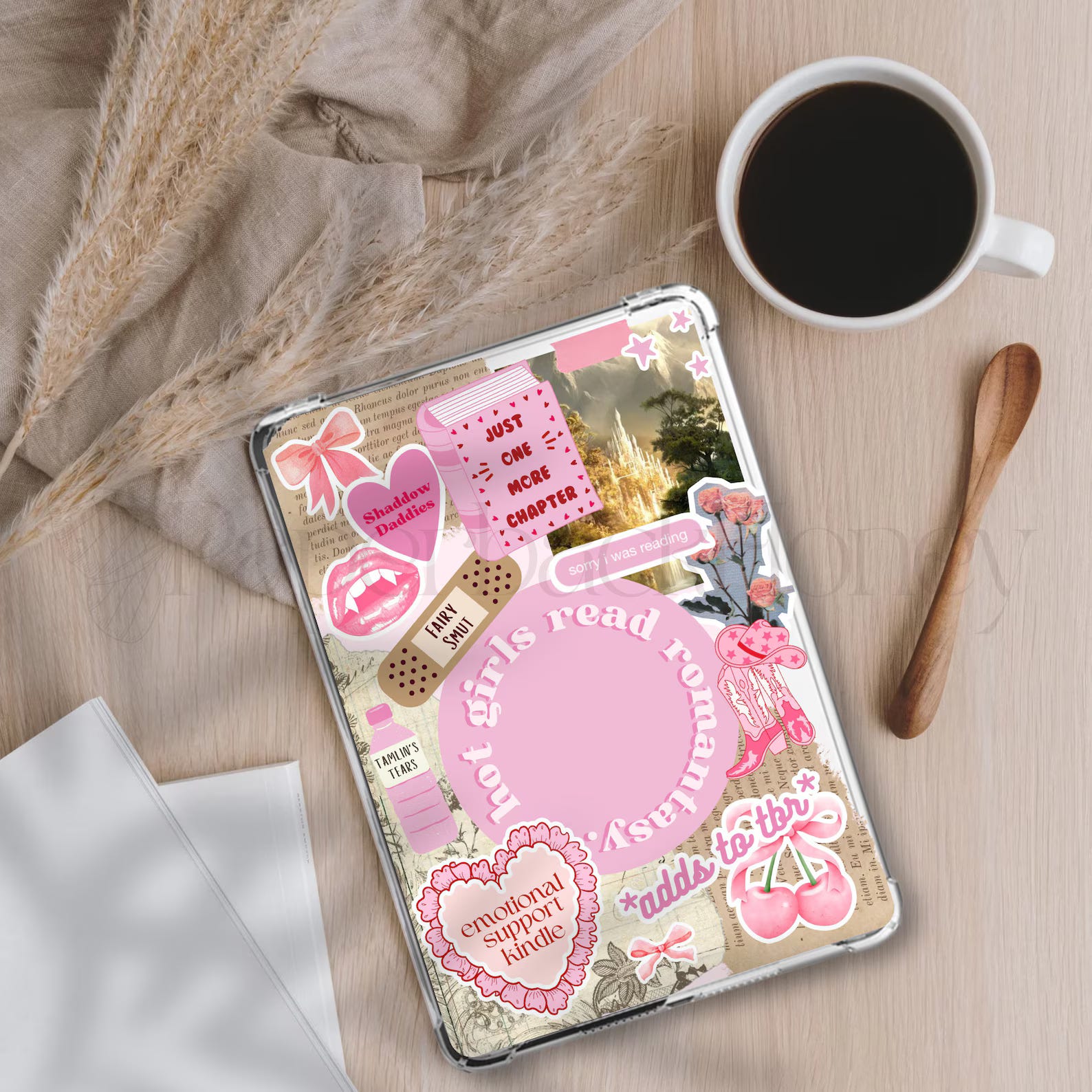
Yes, I know.
I had to. I couldn’t resist.
It’s only the middle of June and in the span of maybe just two weeks, the book world has been rocked by:
Allie Rose Co. attempting (and failing) to trademark the commonly used phrase, “Hot Girls Read”, after claiming that “no one to [her] knowledge was using it”
Ivory Chapters LLC attempted to trademark the other commonly used phrase, “Blind Date With A Book”, but that was almost immediately challenged by the legal team of the American Booksellers Association and is pending review (last I checked a couple of days ago)
Alexander Larman, an author of historical biographies and U.S. Books Editor for The Spectator, published a disparaging article against the Romantasy genre, “It’s time to turn the page on ‘romantasy’”, and filled his argument with…very, very inaccurate assumptions about the genre
While I was spinning Ye Olde Rolodex on subjects to write about, I realized there’s an overlapping topic woven throughout everything going on right now, and it’s this:
We need to talk about “ownership”
I woke up one morning with Journalist Nikki at the helm of my brain.
For some quick background context: I’ve been writing since I was 11 years old, and became the youngest journalist/editor on the high school newspaper at 14, which quickly turned into a periodic publishing feature in the city newspaper by 15. I underwent formal training for all of it, and even though fiction is my wheelhouse, sometimes the old itch to rush into a crowd of protesters or confront a rising politician with hard questions—notepad and pen in hand—resurfaces and I just…I gotta do it.
Which is why I chugged a mug of iced coffee, sat down at my laptop, and sent a list of questions to Allie Rose Co. to get some insights and clarification regarding the trademark issue. And then, after some further thinking (and massive support on Threads), emailed her attorney and the U.S. Trademark Office for general insights as to how it’s possible to claim ownership of a common phrase.
It’s not. I don’t need a response (and I didn’t get any, so there’s that…) to know that the answer to “how is this possible” is “it’s not”. A quick trip to the patent office’s informational website confirmed the public’s suspicions.
Something else surfaced during the research, however. Even though I quickly determined there wouldn’t be a forthcoming deep-dive exposé into the process behind the trademarking, my gut felt like something else was going on underneath the soil.
I posted a poll on Threads and continued talking to readers, authors, and small businesses in the book community to see what, out of all of it, really bothered people the absolute most.
The answer?
Ownership.
The fact that someone, anyone, claimed ownership over something that did not belong to them, was not created by them, and had only recently been discovered by them—and it was allowed because no one in a position of authority did any actual fact-checking.
I wanted to go on a rant about how this is ironic considering the same community loves to superimpose what’s allowed/not allowed by authors based on skin color, but that’s a whole other article for another time.
Although I am very irritated to have to mention that despite my adamant refusal to make anything a “race/ethnicity issue”, there’s no ignoring or denying a very clear pattern in the demographic of who keeps trying to claim ownership over public language. In fact, if I had the extra time, I could probably come up with a very interesting research paper on the almost predictable connection between social media influencer culture, trademark attorneys, and American-white women who adhere to a very specific “look” and “lifestyle ideal” that led to this whole mess.
(Before you leap to broad conclusions about trademark attorneys on social media, I am very happy to inform you that the vast majority of the search results produced BIPOC women who are sharing legal facts and insights!)
I also realized, as I typed that paragraph above, that this is exactly what got people so peeved about that Op-Ed article.
What is “up” with people claiming authority—which can be a type of ownership—over things that don’t actually belong to them?
The average romantasy novel revolves around the usual contrivances of every romance novel ever written, but with a fantastical spin. Virtuous maidens, heaving of bosom and pure of heart, fall in forbidden love with Heathcliffian figures, who are often minotaurs, vampires or werewolves. There are invariably goblins and dragons, who can also engage in sexual congress… (https://spectator.com/article/time-to-fall-out-of-love-with-romantasy)
I’m not saying anyone can “own” a genre.
What I am saying is that if someone—an expert, no less—is going to levy an opinion on a genre of literature outside their own scope of experience, they should be conducting considerable more research than this guy. If he’d written an article about something problematic in historical biographies, or opinion-focused journalism, or anything within what he’s expressed in his professional profile(s), I’d take that far more seriously and trust it because that’s his wheelhouse.
And heck, if he’d read a substantial amount of contemporary Romantasy novels before publishing that article—and still held the same opinion—I think a lot of us wouldn’t be as put off by his statements. Mainly because they’d be far more accurate to the actual genre content and not constantly compared to fantasy novels that are not, and never will be, categorized as Romantasy.
“Hold on, Nikki. Why did you say ‘contemporary’ Romantasy?”
Because that right there?
That’s the issue with the genre as a whole: it isn’t new.
It’s been around for…millennia, honestly.
For a bit of framework to this, I did a quick Google search (which seems to not be happening as much lately? Is it just me?) to grab a publishing industry agreed-upon definition of the actual term, “romantasy” and found this summary from Penguin House:
Romantasy is a fusion of romance and fantasy, where both elements are essential to the story. In these books, the worldbuilding and the relationship develop side by side, each shaping the other as the plot unfolds.
Rather than treating romance as a subplot, romantasy places it at the centre. The emotional stakes are just as important as the external conflict, whether that be a war between kingdoms, a magical threat or a struggle for power. (https://www.penguin.co.uk/discover/articles/romantasy-guide)
{Side Note: That’s actually a great page to bookmark for anyone who wants to learn more about the genre!}
So, to keep this article short enough to (hopefully) fit inside an email and at least keep your attention, here is a list of literary works that have been Romantasy since before Gutenberg invented the printing press:
A Midsummer Night’s Dream
Almost every Arthurian tale pre-dating Le Morte D’Arthur, which has been confirmed to be “fan fiction” of the original stories passed down from the 9th Century
Greco-Roman myths such as Eros & Psyche (the predecessor to Beauty & the Beast)
And then there’s the classics that became popular with the printing press, primarily the stories gathered and compiled by the Brothers Grimm. I really want to slide Hans Christian Anderson into here, given the later adaptation of The Little Mermaid by Disney, but the original versions of his work are more accurately classified as Tragedy than Romantasy.
I know there’s going to be people dissenting this article with “well, actually…” and I’m gonna stop ya right there: I know that the term “romantasy” is a new word to enter the lexicon of the English language and publishing world. The establishment of the word’s definition is new. The category in bookstores both online and brick-and-mortar is new, the marketing push is new, et cetera.
But what it is? The actual existence of the material?
It’s been around since long before any of us were born, and it’s going to continue to be around long after. There’s no “turning the page” on something that has been woven into the tapestries of cultures around the world in both oral tradition and printed editions, and it’s awfully presumptuous to declare a need to end it.
Because…why?
A woman-owned bookstore was painted pink?
Words are easy to craft, easy to utilize, and easy to immortalize. With the right strategy, they’re also fairly easy to monetize.
So it wasn’t as surprising to read a “lawyerfluencer” (I made that up; I might trademark it) explain in a post that owning the phrase, name, etc. that your brand uses all the time is “the best way to secure your brand”. Monetize those words, Boss Babe! “Scale your business” and make people pay for the privilege to utter your catch phrase/name/logo!
When I read Larman’s bio, it took only one paragraph to see the concern tilling the soil of that whole viewpoint: he writes in a genre readers don’t exactly camp outside bookstores to acquire. Money isn’t being thrown at Historical Biographies the way it’s practically raining down upon Romantasy novels.
It’s easy enough to successfully pitch a manuscript of that caliber to a publisher (from what I’ve been told), but try getting the general public excited about Lord Byron’s abusive philandering in the same way that makes them stampede brick-and-mortar bookstores for the newest installment of The Empyrian series. It makes sense that a subconscious fear of being irrelevant—and potentially dropped by the publisher if sales don’t remain consistent—could lead to a rather uninformed, heavily biased opinion against the attention-stealing genre.
The lesson to learn through all this “bookish drama”: you own your words, and no one else can tell you to stop using them.
I write Romantasy because I’ve experienced things in my life that no one believed ever happened. My voice was silenced. My abuse was minimized. My trauma was scoffed at and even questioned as “just a nightmare” as if the scars inside my body came from some Dream Sequence like Dorothy at the end of The Wonderful Wizard of Oz.
But I refused to let it all fester in the pit people tried to bury it in. I figured, since it’s so unbelievable…why not write it all out as fantasy fiction?
The romance comes into play as a simultaneous proclamation to someone I really, really hope has been reading and following along—and as a message to an alarmingly large amount of people who think having a Villain Origin Story gives someone the right to be a villain.
At the end of it all, is personal vindication and self-imposed vigilante justice worth losing the one(s) you love?
Or can you love someone so much, it overrides every ounce of pain and suffering, makes you turn away from vengeance, and actually ripples a series of changes throughout the world…even if there’s a chance you’ll ever see them again?
These are the questions I personally think no other genre fully explores as deeply as Romantasy.
And whether you’re “hot” or not, it’s definitely worth the read.


The craziest thing I saw on the Allie Rose fiasco was when someone else started a kickstarter to raise money to try and trademark “Allie Rose Comapny” out from underneath her. It just demonstrated such a fundamental misunderstanding of how that whole system works.
I saw the romantasy article pop up on my feed, but as soon as I read,"The average romantasy novel revolves around the usual contrivances of every romance novel ever written," I rolled my eyes and scrolled on.
Yet another man who doesn't understand the purpose of romance, let alone romantasy.
I have an MA in English Literature, and when I first came into the romantasy space, I was fully expecting to have to deal with the same low-grade misogyny that I had dealt with throughout both my literature degrees. Classics were Serious Literature. Books with male authors were Serious Literature. Books written by women might sometimes be considered Serious Literature if the author had died tragically. Bonus points for suicide. Jane Austen died young and in poverty of a mysterious ailment, but that wasn't always tragic enough to qualify her. After all, she wrote drawing room romance, which couldn't possibly be important.
So imagine my shock when I started writing romantasy, fully expecting the male fantasy authors in the sphere to be positioning themselves as some kind of gatekeepers of fantasy's "purity" as a genre. But all I found were a bunch of really enthusiastic male authors fascinated by romantasy's success, fully supporting their female colleagues' writing of it, and engaging in discussion about it.
These men get it. Even if romance isn't their genre of choice, they understand its purpose and function, and they welcome its presence in fiction. Just as I don't especially enjoy horror as a genre, but I understand that it serves a particular function, allowing people a safe space to process their deepest fears. Just because I am not interested doesn't mean I'm about to go out and write an article called "We Need To Get Over Horror Already" about it.
Also, regarding "romantasy" as a neologism, the same debates were going on around fanfiction 10-15 years ago as online communites like A03 established themselves. Forgetting, of course, that fanfiction has also been around as long as humans have lived. Isn't that how oral tradition evolves, by stories getting passed around over generations? It's only as we've solidified the concepts of a "single author" and "intellectual property" that fanfiction became controversial. Now, though, it's so established that people don't bat an eye anymore (just look at the Dramione-fanction-to-trad-pub pipeline).
All this to say, you're right that an author who doesn't understand anything about a particular genre, especially a male author opining on a woman-dominated genre that has long resisted and subverted patriarchal norms, should maybe stay in his lane.